Body Fat Percentage: Why the Scale is Lying to You
Learn why your Body Fat Percentage is a much better indicator of health than your overall weight. We explain how it is measured and what healthy ranges look like.
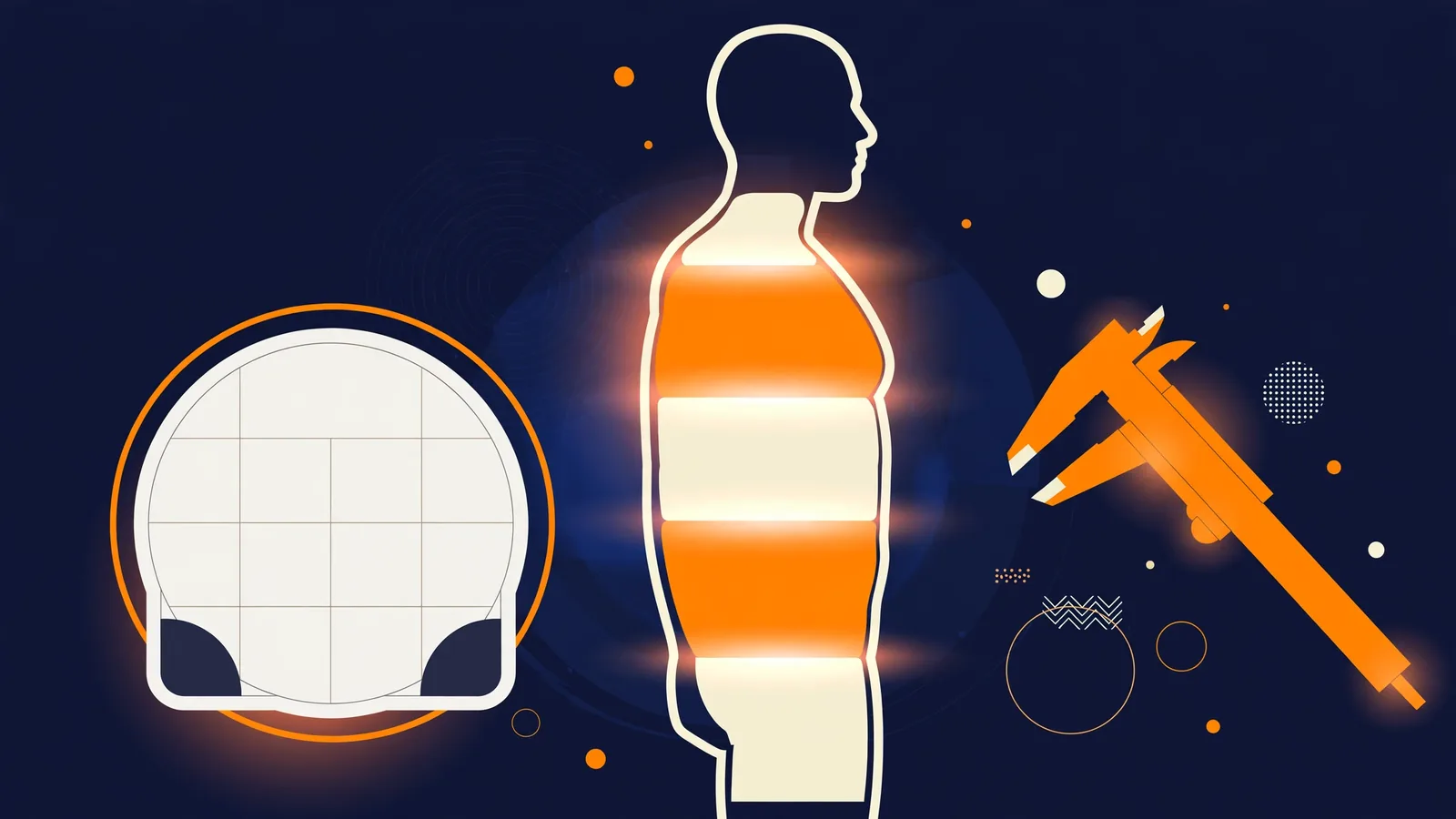
Estimate your body composition instantly using our Body Fat Percentage Calculator, or read on to discover why the bathroom scale only tells half the story.
If you step on a scale and it says you gained three pounds, did you gain three pounds of fat, three pounds of muscle, or simply retain three pounds of water? The scale cannot tell you. This is why fitness professionals emphasize Body Fat Percentage over total body weight.
What is Body Fat Percentage?
Your body is primarily composed of two things:
- Fat Mass: Essential fat (needed to survive) and storage fat (adipose tissue).
- Fat-Free Mass (Lean Body Mass): Everything else, including muscle, bones, organs, and water.
Your Body Fat Percentage is simply the total mass of your fat divided by your total body mass. If you weigh 200 pounds and have 40 pounds of fat, your body fat percentage is 20%.
Enter your own numbers and see the result instantly — free, no signup.
Fat Mass vs. Lean Mass: A Worked Example
Percentages become much clearer when you convert them into pounds. Take a person who weighs 180 pounds with a body fat percentage of 25%.
- Fat mass: 180 × 0.25 = 45 pounds of fat
- Lean mass: 180 − 45 = 135 pounds of muscle, bone, organs, and water
Now suppose this person wants to reach 20% body fat while keeping all 135 pounds of lean mass. The target weight is not a guess — it is a division problem.
Target weight = Lean Mass ÷ (1 − Target Body Fat %) Target weight = 135 ÷ 0.80 = 168.75 pounds
So the real goal is losing about 11 pounds of fat — not an arbitrary "lose 20 pounds." This kind of math turns a vague goal into a precise one.
Why the Scale Misleads You
Your total weight can swing by several pounds in a single day without any fat being gained or lost. Four common culprits explain most of the confusion.
Water Retention
A salty meal, a hard workout, or a hot day can cause your body to hold extra water. That water weighs exactly as much as fat on the scale, but it leaves within a day or two.
Muscle Gain
Muscle is denser than fat. If you start strength training, you can gain two pounds of muscle while losing two pounds of fat. The scale shows zero progress while your body composition improves dramatically.
Glycogen Stores
Your muscles store carbohydrates as glycogen, and each gram of glycogen holds water with it. A high-carb weekend refills those stores and can add several pounds that have nothing to do with fat.
Time of Day
You are lightest in the morning after an overnight fast and heaviest in the evening. Comparing a morning weigh-in to an evening weigh-in can fake a three-pound "gain" out of thin air.
Healthy Body Fat Ranges
Because women biologically require a higher percentage of essential fat for childbearing and hormone regulation, healthy ranges differ significantly between sexes.
| Category | Men | Women |
|---|---|---|
| Essential Fat | 2-5% | 10-13% |
| Athletes | 6-13% | 14-20% |
| Fitness | 14-17% | 21-24% |
| Average/Acceptable | 18-24% | 25-31% |
| Obese | 25%+ | 32%+ |
(Note: Dropping into the "Essential Fat" range for prolonged periods is highly dangerous and can lead to severe endocrine and cardiovascular issues).
Body Fat Percentage vs. BMI
Body Mass Index (BMI) is the other number people quote, but it measures something different. BMI uses only your height and weight, so it cannot distinguish an athlete from a sedentary person of the same size.
A 200-pound professional athlete and a 200-pound office worker can share an identical BMI. Their body fat percentages, however, might be 12% and 28% — completely different health profiles.
BMI is still useful as a quick population-level screening tool. For personal decisions, body fat percentage gives the fuller picture. You can check both numbers with our BMI Calculator and compare them side by side.
How is it Measured?
Calculating exact body fat percentage is notoriously difficult. Unlike measuring height or weight, you cannot just stand on a simple device to get a perfectly accurate reading.
- DEXA Scan: The gold standard. An x-ray scan that maps your exact fat, muscle, and bone density. Highly accurate but expensive.
- Hydrostatic Weighing: Submerging yourself in a tank of water to measure displacement. Highly accurate but very inconvenient.
- Skinfold Calipers: Using physical pinchers to measure the thickness of subcutaneous fat at various sites on the body. Very accurate if done by a trained professional.
- Bioelectrical Impedance (Smart Scales): Sending a tiny electrical current through the body. Very convenient, but wildly inaccurate because it is heavily affected by hydration levels.
- The US Navy Formula: A mathematical estimation based on the circumference of your neck, waist, and hips. It is the most accurate method you can do at home for free.
The US Navy Formula
If you want to estimate your body fat at home, the US Navy formula is a widely accepted benchmark. You only need a measuring tape.
- Men: Measure your neck (below the Adam's apple) and your abdomen (at the navel).
- Women: Measure your neck, waist (narrowest point), and hips (widest point).
The formula uses complex logarithms to estimate body density based on these circumferences relative to your height.
Measuring Tips for Better Estimates
Small measuring errors change the formula's output, so technique matters. A few habits make your home estimates far more consistent from week to week.
- Measure in the morning before eating, when your abdomen is at its smallest and most consistent.
- Keep the tape snug but not tight. It should lie flat on the skin without compressing it.
- Measure each site three times and use the average. Single readings are easy to misread by half an inch.
- Use the exact same spots every time. Marking the locations lightly with a pen helps for the first few sessions.
- Record the raw measurements, not just the final percentage, so you can spot a bad reading later.
How to Use Your Number
A single body fat reading is a snapshot, not a verdict. The number becomes powerful when you track it under the same conditions over time.
Measure every two to four weeks rather than daily. Fat changes slowly, and daily readings mostly capture tape placement and hydration noise instead of real progress.
Pair the percentage with your lean mass figure. If your weight drops but your lean mass holds steady, the loss came from fat — exactly what you want. Our Ideal Weight Calculator can help you sanity-check the target range for your height.
If a reading looks alarming or you have a medical condition, treat this article as education only. A doctor or registered dietitian can interpret body composition in the context of your full health history.
Not All Fat Is the Same: Location Matters
The percentage tells you how much fat you carry. Where you carry it carries its own information, and health researchers treat the two depots very differently.
Subcutaneous Fat
This is the fat stored directly under the skin — the kind calipers pinch and the kind you can see. It insulates the body and stores energy. In moderate amounts it is relatively benign, and it makes up the large majority of most people's fat mass.
Visceral Fat
Visceral fat is stored deep inside the abdomen, wrapped around the liver, intestines, and other organs. You cannot pinch it, and two people with identical body fat percentages can have very different amounts of it.
Visceral fat is the depot most strongly linked in research literature to metabolic problems. A growing waistline at a stable weight is one practical hint that visceral fat may be increasing even while the total percentage barely moves — another reason to track measurements, not just percentages.
Essential Fat vs. Storage Fat
Essential fat is the minimum required for normal hormone function, nerve insulation, and organ protection — it is the floor in the ranges table above. Everything above that floor is storage fat, the energy reserve the body draws on when intake runs short.
When people diet, the goal is to reduce storage fat while never approaching the essential floor. That is why extremely low body fat percentages are a medical concern rather than an achievement.
FAQ
Why do I look different than someone else with the exact same Body Fat Percentage? Where your body stores fat is largely determined by genetics. Some people store fat primarily in their abdomen (visceral fat), while others store it in their hips and thighs (subcutaneous fat).
Two people with 20% body fat can look drastically different depending on their genetic fat distribution.
How accurate is the US Navy method? It is an estimate, not a lab measurement. For most people it lands within a few percentage points of more expensive methods like DEXA, which is close enough to track trends reliably. Consistency in how you measure matters more than chasing a perfectly exact figure.
Can I be a healthy weight but still have high body fat? Yes. This is sometimes called "normal-weight obesity" or being "skinny fat." A person can have a normal BMI and scale weight while carrying a high proportion of fat and very little muscle. It is one more reason composition beats weight alone.
How often should I measure my body fat? Every two to four weeks is a sensible rhythm for most people. Fat loss and muscle gain are slow processes, and measuring too often mostly records water fluctuations and measuring error rather than real change.
To calculate your Body Fat Percentage using the US Navy method instantly, use our free CalcUnit Body Fat Percentage Calculator.